
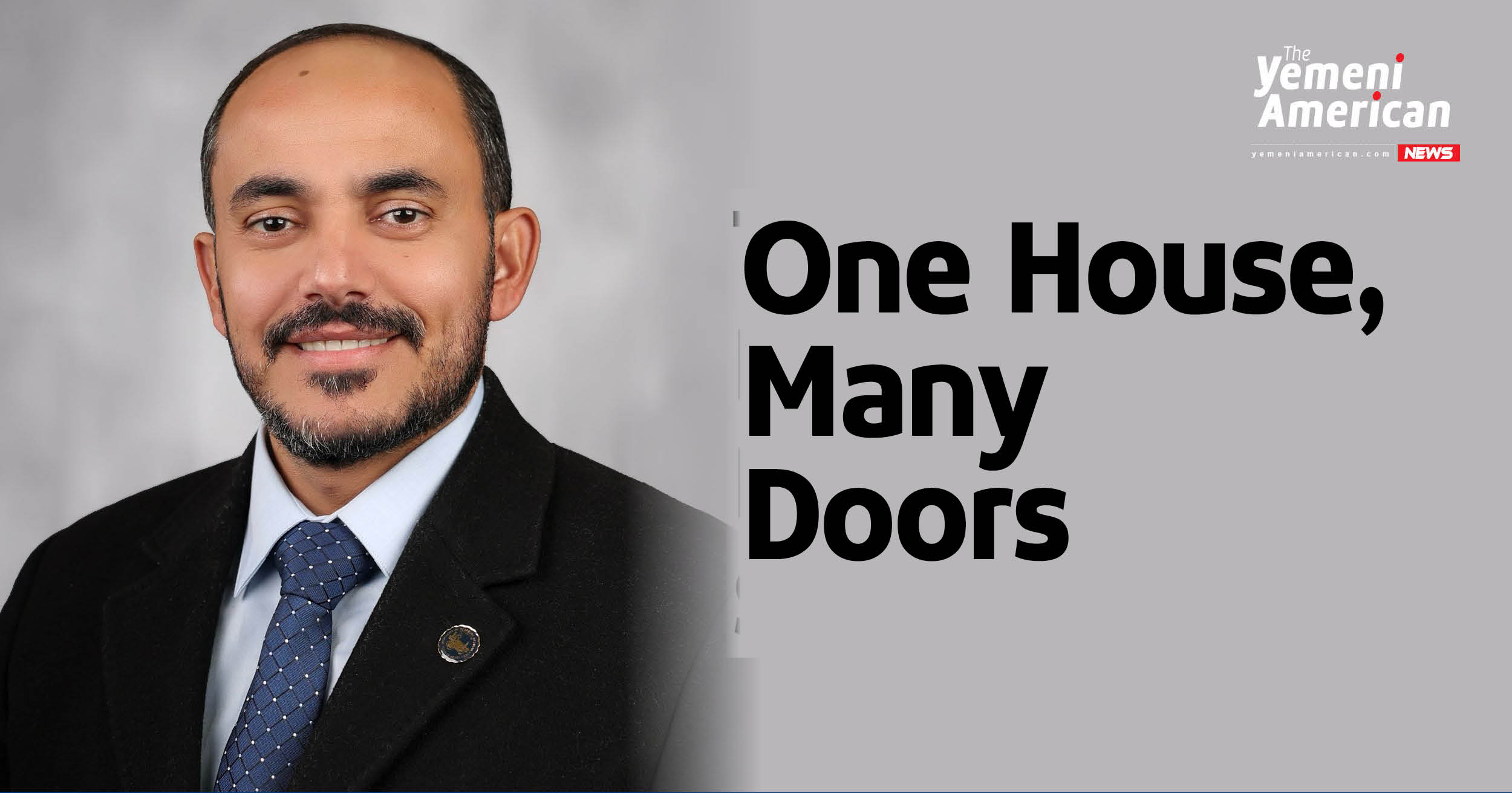
By/ Adel AlAdlani *
There is a moment in every election cycle when the air grows thick with something other than debate. Not necessarily the clash of ideas that fills the room, but the murmur of suspicion, whispered warnings about the other, the outsider, the one who does not belong. This is the moment when democracy falters, not in its institutions but in its people, who are persuaded to look sideways at one another instead of upward at those who truly hold power.
Abraham Lincoln, standing before the Illinois Republican Convention in 1858, declared with prophetic clarity that “a house divided against itself cannot stand.” His concern was slavery, yet the principle extends beyond any single issue. Lincoln understood that a political community must choose between a republic grounded in equality or an oligarchy built upon hierarchy and subservience. When politicians invoke race or religion as weapons, they are making this choice for us, often by stealth. The strategy is as effective as it is ancient. By creating a narrative of “us” versus “them,” those in power divert attention from the upward flow of wealth and the erosion of democratic accountability. Division is one of the most reliable tools of the powerful. When citizens are encouraged to view their neighbors as threats, they overlook the real decisions that shape their lives. The oligarchs rely on identity politics that separate people into groups, justifying their control while maintaining the system.
Yet the house we share has always had many doors. The history of this nation is a story of people arriving from every corner of the earth, each finding their own way in. Some entered through the grand front entrance, while others found smaller doors, side doors, doors that seemed barely open. But the house remained one house, and the promise of belonging extended to all who sought it.
The contemporary landscape offers vivid illustrations. Consider Barbara Jordan, the first Black woman from the South to serve in Congress. When she pursued a seat in the Texas Senate in 1966, many deemed it unacceptable for a Black woman to run. Yet Barbara Jordan pushed ahead, winning the first seat ever held by a Black woman in the Texas Senate. She made her mark on the nation during the Watergate crisis, eloquently calling for the impeachment of President Nixon. In her 1976 Democratic Convention keynote, she asked: “Are we to be one people bound together by a common spirit, sharing in a common endeavor, or will we become a divided nation?” Jordan legislated on behalf of what she called “the common good,” demonstrating that Black women could lead the country through challenging times. She found her door and walked through it, proving that the house was large enough for her.
Research confirms the pattern Barbara Jordan faced. A study analyzing over 23 million social media posts found that women politicians receive significantly more identity-based attacks than their male counterparts, with threats of violence and morality-focused language directed at them far more frequently. A comprehensive study by the Center for American Women and Politics found that Black women candidates face significantly more identity-based attacks than their white counterparts, with 67 percent of Black female candidates reporting that their race or gender was used against them during campaigns, compared to only 23 percent of white male candidates. Furthermore, a 2023 analysis by the Brookings Institution revealed that candidates of color receive approximately 40 percent more negative coverage on identity-related issues than white candidates with comparable qualifications. The data exposes a systemic reality, yet it also reveals the resilience of those who refuse to be diminished.
Consider Keith Ellison, the first Muslim elected to Congress. Ellison, a lawyer and former state legislator from Minnesota, faced a concerted campaign to delegitimize him based on his faith. He was accused of being a “secret Muslim,” as if his religious identity were a crime, and of having ties to the Nation of Islam, despite his public repudiation of its more controversial figures. The attacks were about his identity, a strategy designed to make him seem un-American. Yet Ellison endured with quiet dignity, demonstrating that American leadership is defined by character and commitment to the common good rather than by religious heritage. His presence in Congress was a living embodiment of the American promise, the assurance that belonging is determined by dedication to the welfare of all. He found his door and walked through it, proving that the house was large enough for him.
Religious divisions follow a similar pattern. According to a report by the Center for the Study of Organized Hate, between February 2025 and March 2026, 46 elected officials published over 1,100 discriminatory posts against American Muslims, a 1,450 percent increase. Sixty-four posts explicitly called for the expulsion or stripping of citizenship of Muslims. The Council on American-Islamic Relations documented 8,683 complaints of anti-Muslim and anti-Arab discrimination in 2025, the highest annual total since the organization began tracking such data. Senator Tommy Tuberville of Alabama juxtaposed an image of the September 11 attacks with a photo of New York City Mayor Zohran Mamdani, suggesting that “the enemy is inside the gates.” Representative Andy Ogles of Tennessee called for the expulsion of Muslims from American society, while Representative Randy Fine of Florida declared that “we need more Islamophobia, not less.” This rhetoric, far from being condemned by party leaders, is embraced. It is amplified from the highest office in the land, where the president has deployed imagery evoking the darkest chapters of American racial history against the nation’s first Black family, while simultaneously casting Muslim elected officials as threats to the nation’s security and identity. Yet the response from many Americans has been one of solidarity, recognizing that such appeals are expressions of fear. They understand that when one door is closed to a neighbor, every door is less secure.
Booker T. Washington, speaking in 1896, offered a profound rebuttal to this politics of division. Reflecting on a black cadet at the Naval Academy who endured two years of harassment, Washington observed that education that gives one physical courage to stand in front of the cannon must also give moral courage to stand up in defense of right and justice. He continued with a plea that resonates across the decades: “My friends, we are one in this country… We rise as you rise; when we fall you fall. When you are strong we are strong; when we are weak you are weak. There is no power than can separate our destiny.” These words remind us that unity is a practical necessity. The oligarchs thrive on the fiction that we are separate, yet history teaches us that our fates are intertwined. One house, many doors, and every door leads to the same shared space.
Across the nation, a new generation of leaders has emerged, demonstrating that courage and competence are available to all. James Talarico in Texas, a former public-school teacher, has shown that one can be both deeply religious and deeply committed to public education. Alexandria Ocasio-Cortez in New York, the youngest woman ever elected to Congress, has proven that working-class roots and steadfast conviction can reshape the political landscape. Dr. Abdul El Sayed in Michigan, a Rhodes Scholar and former health director of Detroit, has demonstrated that expertise and compassion go hand in hand. Zohran Mamdani in New York, the city’s first Muslim mayor, has shown that leadership is about vision rather than heritage. Each found their own door. Each entered. And each now works to ensure that the doors remain open for those who follow. What unites these leaders is their character, their competence, and their refusal to be controlled. They demonstrate that governance is a moral vocation open to all rather than a technical specialty reserved for the wealthy. They show us that the future of the democratic vision depends on the willingness to engage with difference, to listen to one another, and to find common ground. They remind us that one house can hold many stories, many voices, many dreams.
Lincoln once said that “if we could first know where we are, and whither we are tending, we could then better judge what to do, and how to do it.” We are tending toward a more diverse and complex nation, and the question is whether we will meet this moment with fear or with hope. The powerful few sow division because they understand that a united people cannot be ruled against their will. But they also understand that the American people are resilient. The history of this nation is a story of overcoming, of bridging gaps, of finding common purpose, of insisting that the republic we share is large enough for all.
The house we share will only stand if we refuse to be divided. The powerful sow division because they know that a united people cannot be ruled against their will. Yet the American people have always found the courage to overcome. It was the courage of Booker T. Washington, who insisted that we rise and fall together. It was the courage of Barbara Jordan, who asked whether we would be one people or a divided nation. It is the courage of every leader who found their door and held it open for others. That same courage is now asked of us. One house, many doors. The choice is ours. We can close our doors and live in fear, or we can open them and live in hope. The republic awaits our answer.
* Adel AlAdlani has a PhD in Public Administration from Western Michigan University