
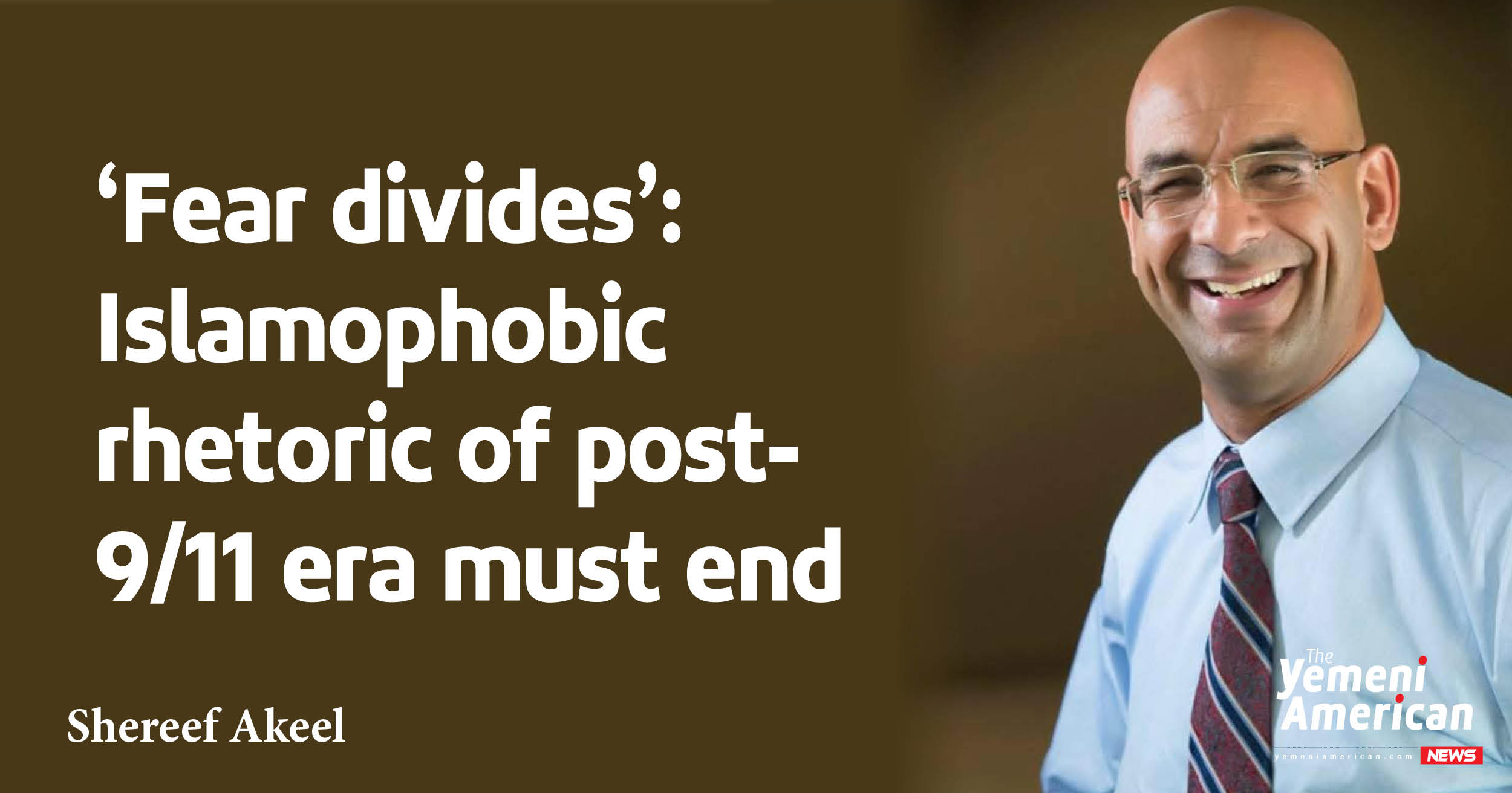
By Shereef Akeel
Here we go again.
I feel like I’m watching a rerun.
After September 11, Muslim Americans were too often made into the bogeyman. Arabic terms like “Allah” and “Sharia” were often repeated without even explaining what they meant, making them sound foreign and frightening and contributing to a climate of fear and discrimination.
More than 20 years representing innocent Iraqis tortured at Abu Ghraib showed me firsthand where fear and dehumanization can lead because of someone’s faith.
Today, we are hearing some of the same rhetoric again—from warnings that Muslims will somehow “impose Sharia law” on America to statements that Muslims should be deported.
Words matter.
Just last week, four Muslim Michiganders were peacefully gathered outside the Troy Public Library when, according to prosecutors, a man approached them, said he hated Muslims, and threatened to kill them.
Muslims make up less than 2% of this country. They are our doctors, teachers, business owners, first responders, lawyers, neighbors and friends.
And Muslim Americans are not newcomers to the American story.
Muslims were here before America was even a country. Historical records trace Muslims in North America to the 1500s. Enslaved African Muslims helped build this country, and Muslims fought alongside other Americans in the Revolutionary War.
And right here in Michigan, Arab Muslim immigrants worked in Ford’s factories – including the Ford Rouge complex in the City of Dearborn – during the Model T era, helping build the automobile industry that transformed our state and our country.
Thomas Jefferson purchased a Qur’an in 1765—11 years before the Declaration of Independence. His copy is preserved today in the Library of Congress.
“Allah” simply means “God” in Arabic. “Sharia” broadly refers to Islam’s religious, moral and legal tradition, just as Christianity has Canon law and Judaism has Halakha.
We have seen this movie before.
Muslim Americans are not the bogeyman. They are Americans. They have been part of this story for centuries.
Fear divides. Knowledge unites.