
‘You have to be active’: Muslim Americans push back against hate after San Diego shooting
Their names were Amin Abdullah, Mansour Kaziha and Nadir Awad.
Those were the three heroes killed by two teenage gunmen at the Islamic Center of San Diego. Abdullah, a security guard, engaged the shooters and gave up his life for the safety of the center, which also housed an Islamic school.
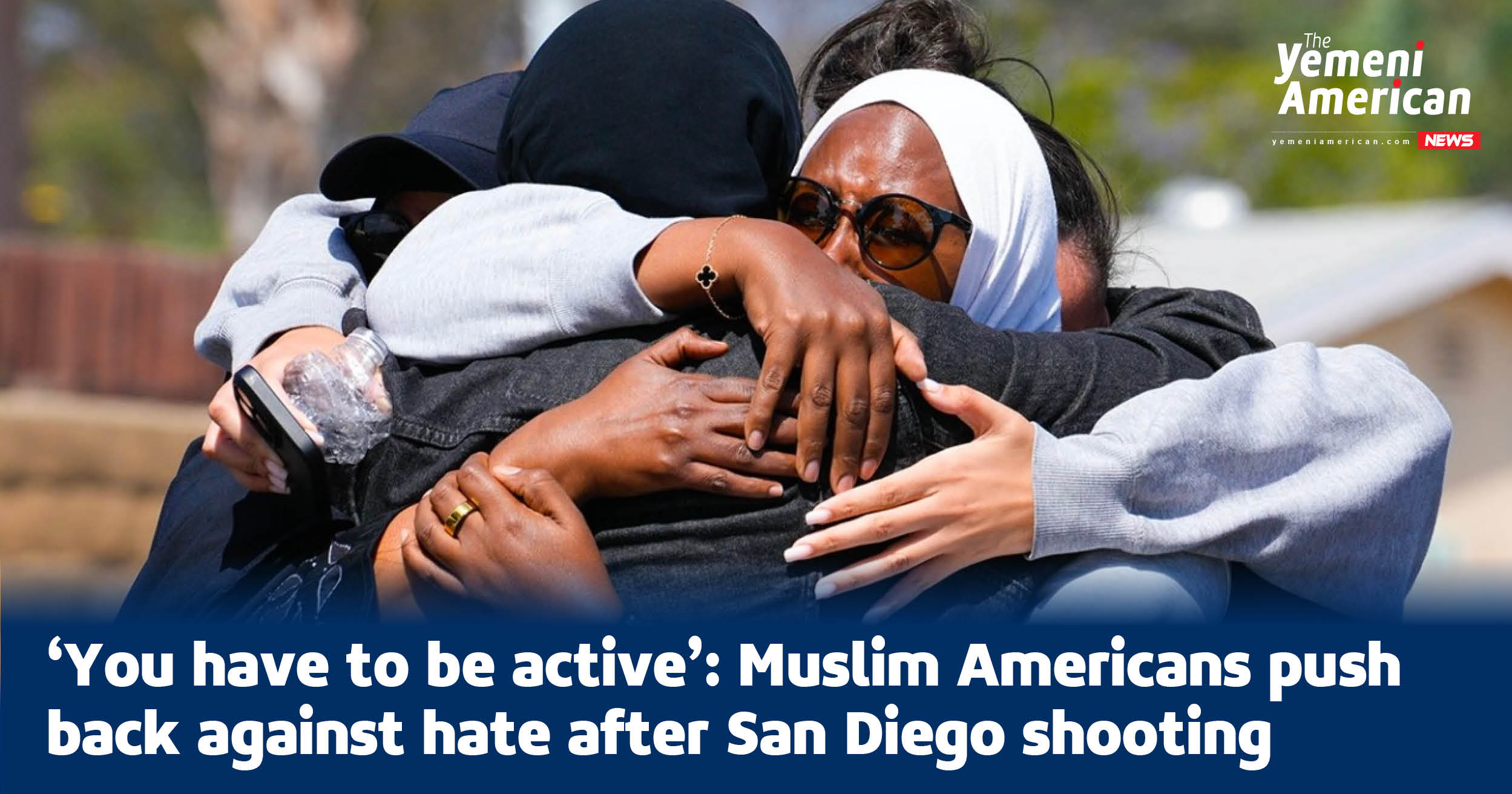
While the shooting left the local Muslims in Southern California and hundreds of thousands across the country grieving, it has also raised calls for increased activism to protect the community’s rights and spaces.
Muslim Americans sprung to action immediately after the attack, raising more than $3.5 million for the victims’ families.
Locally, Muslim American leaders condemned the attack and warned about the dangers of rising Islamophobia.
“Any attack on a house of worship is an attack on the fundamental values of religious freedom, human dignity, and peaceful coexistence,” Imam Mustapha Elturk, co-Chair of the Imams Council of Michigan, said at a news conference.
Islamophobia
Imam Mohammad Ali Elahi also decried the shooting, saying that it has “deeply shaken” Muslim communities across the nation.
“This tragedy comes amid the growing wave of Islamophobic rhetoric that has been weaponized by certain political figures,” Elahi said.
Law enforcement agencies across Metro Detroit stepped up security around mosques after the San Diego attack.
“Out of an abundance of caution, Chief Issa Shahin has directed Dearborn Police officers to increase patrols and provide additional attention to mosques and houses of worship throughout the City of Dearborn,” the Dearborn Police Department said in a statement.
“At this time, there is no known threat to the Dearborn community. These proactive measures are being taken to help ensure the safety of residents, visitors, and all faith communities throughout our city.”
Major police departments across the country, including in New York, also released similar statements.
The shooting followed years of increased Islamophobia, where mainstream politicians have been openly trafficking in anti-Muslim bigotry and promoting hate against the community.
Earlier this year, Republican Congressman Randy Fine said mainstream Muslims should be “destroyed”.
Fine was endorsed by President Donald Trump.
While the US president called the shooting in San Diego “terrible”, his White House has not released a formal statement condemning the attack.
And Trump ally Laura Loomer attacked the Islamic Center of San Diego after the incident, calling on ICE agents to raid the mosque.
Rights groups have noted an uptick of Islamophobia and anti-Arab bigotry since the start of Israel’s war on Gaza, which UN investigators have concluded amounts to a genocide.
In 2023, an assailant stabbed six-year-old Palestinian American childWadea al-Fayoume to death in a hate motivated attack.
Weeks later, three Palestinian American students wearing Keffiyehs were shot in Vermont.
And there have been numerous assaults and vandalism incidents against Muslim institutions supporters of the Palestinian cause across the country.
Call to activism
Advocates say the deadly attack in San Diego was a culmination of the hate and dehumanisation that Palestinians and Arabs and Muslims more broadly have been facing.
While the shocking shooting, which many observers have described as a terrorist attack, plunged the community into sorrow, advocates are calling for transforming the pain into activism.
Nihad Awad, executive director of the Council on American–Islamic Relations (CAIR), warned at a conference in Baltimore against allowing anti-Muslim activists to scare the community and keep it away from its own institutions.
“Fear is not good for the community. Fear leads you to be marginalized,” Awad said.
“When you are marginalized, you are in the darkness. When you are in darkness. You are going to be weaker and weaker and weaker. So you have to be in the spotlight. You have to be in the middle of the road. And you have to be active. You have to be visible. You have to be courageous.”
But away from politics, Muslim Americans in San Diego are left with deep wounds, missing three respected members of the community and dealing with the trauma of the attack.
Kaziha, 78, known as Abul Ezz, was the shopkeeper at the center.
Awad, 57, was a neighbor and the husband of a teacher at the school. He ran to help when he heard the shots.
Abdullah, 51, was the security guard, whom police have credited with saving many lives when he confronted the shooters.
“He is the one who stopped them, who slowed them down,” Taha Hassane, imam and director of the Islamic center, said at a news conference. “If he didn’t do what he did, and he sacrificed his life, the two suspects could have easily accessed every single classroom.”
Congresswoman Sara Jacobs, who represents San Diego, introduced a resolution in the House of Representatives to honor the victims.
“This ugly act of domestic terrorism doesn’t represent our San Diego community, but the brave and heroic sacrifices of Amin, Abul Izz, and Nader do,” Jacobs said.
“These great men saved the lives of many others. The best way to honor their memory is to finally address the horrific rise of Islamophobia and anti-Muslim hate. It’s our collective responsibility to condemn hateful rhetoric and violence, and stop it from spreading across our country.”