
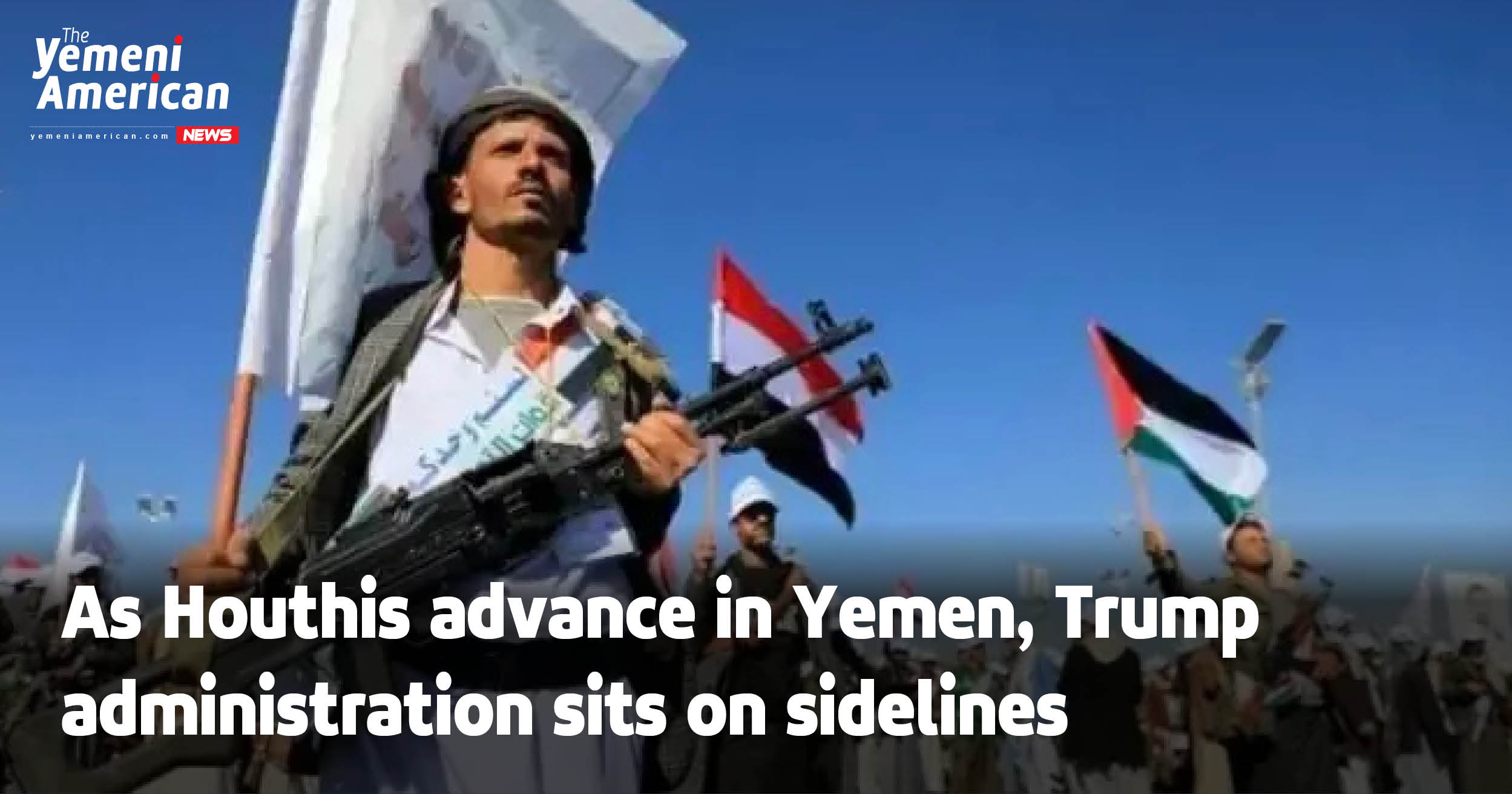
President Donald Trump and some of his top aides have made it clear that the United States will not resume its strikes in Yemen as the Houthis advance against government forces backed by Saudi Arabia on the country’s Red Sea coast.
After the Houthis, known as Ansar Allah, started their blistering offensive last week, several news outlets reported that Saudi Crown Prince Mohammed bin Salman called Trump and asked him to intervene. The US president declined.
Trump later said the Houthis also contacted him and told him that they do not want a military confrontation with the United States.
“The Houthis called us, and they let us know that they don’t want to fight with us. They don’t want me to go after them,” Trump said.
‘Direct conversation’
Vice President JD Vance echoed that comment, saying that Washington and the Yemeni group engaged in “direct conversation”.
“We actually feel like we are on top of the situation,” Vance said earlier this week.
“It’s a very fluid and dynamic thing, but we’re going to keep on monitoring it, making sure that America’s best interests are represented.”
Since then, there have been reports of direct negotiations between US officials and Houthi officials in Oman.
Other Trump administration officials have tried to play down the Houthi gains, which put the Iran-allied group on the shores of the strategic Bab al-Mandeb Strait.
“In this case I don’t think it’s quite that bad,” US ambassador to Israel Mike Huckabee told Newsmax. “What we do have is a for sure skirmish between Saudi Arabia and Yemen, but it has not really gone across the region … That’s the good news.”
The US provided logistic support to Saudi Arabia from the outset of the Riyadh-led intervention in Yemen in 2015.
But as the Houthis started targeting ships linked to Israel in solidarity with Palestinians in Gaza in 2023, Washington began bombing Ansar Allah’s positions directly in Yemen.
The US strikes did little to stop the Houthi campaign. The Yemeni group also regularly fired missiles and drones at Israel.
Then-President Joe Biden admitted early in 2024 that the US attacks against the Yemeni group were not working.
“Are they stopping the Houthis? No. Are they going to continue? Yes,” he said.
When Trump came into office, he intensified the US bombardment of Yemen before abruptly ending it through a ceasefire agreement with Ansar Allah that excluded Israel.
Trump is not rushing back to strike the Houthis on behalf of his Saudi allies.
Ansar Allah officials have committed to keeping the Bab al-Mandeb Strait open for all vessels except Saudi ships.
War fatigue
If the Yemeni group decides to restrict movement in the vital waterway, the move could prove disastrous for the global economy as well as Trump’s Republican Party that is preparing for a bruising midterm election in November.
The war with Iran and closure of the Strait of Hormuz has sent diesel prices to record highs in the US.
The average price of one gallon of gasoline now stands at $4.44 when it was less than $3 before the US and Israel decided to attack Iran.
After the wars in Iraq and Afghanistan and amid an ongoing confrontation with Iran that many critics see as unnecessary and illegal, the US public is suffering from war fatigue.
Trump’s popularity has taken a hit due to the Iran conflict, which has fuelled inflation in the US. So the last thing the White House wants now is another war.
Washington is watching the Houthis and Saudi Arabia and the forces that the kingdom supports inside Yemen fight it out from the sidelines.
Meanwhile, the Trump administration has approved more than $30 billion in weapons sales to Saudi Arabia this month, including a deal for F-35 Lightning II Joint Strike Fighter jets.
It’s not clear whether advancing the sales was linked to the events in Yemen.
So, while the US has not intervened directly against the Houthis, it remains in the picture as a key part of the security infrastructure in the Gulf region.