
By/ Adel AlAdlani *
A storm bore down on a lighthouse. Eighty million dollars, gathered from hedge funds and real estate and the quiet accounts of men who have never waited in a hospital line, and it crossed Michigan the way weather crosses the Great Lakes, without asking, without apology, meaning to put out the light. The light held. That is where this story begins, with the oldest question in American politics asked again and answered plainly: can a people outlast the price of their own silencing?
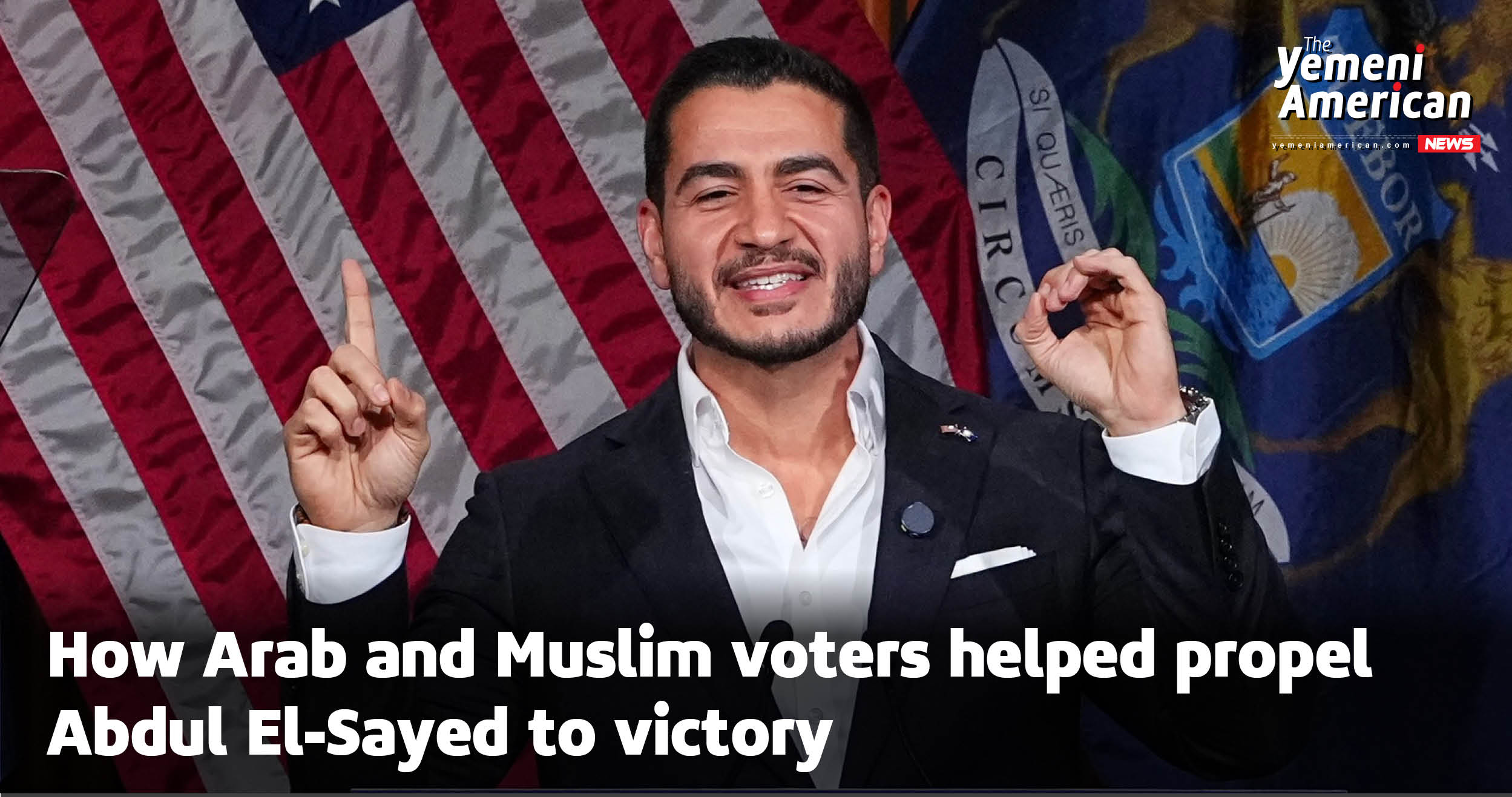
Dr. Abdul El-Sayed, public health official, son of Egyptian immigrants, a man who once kept the vital signs of a city’s health and has spent his life reading the pulse of a sick republic, took 2,507,454 votes (52.5%) to Mike Rogers’ 2,172,586 (45.5%). A margin, yes, but margins are only the skeleton of a story. The flesh of it lies elsewhere: in what he endured, in what he refused, and in what his refusal has now made possible.
The heart of the campaign beat in Wayne County. It is a place that has been called many names by people who never lived there, and El-Sayed let it call him. In that county, home to Detroit and to the great Arab American community of Dearborn, he took more than 70% of the vote, a margin exceeding 43 points, a margin so wide it ceased to be a margin and became a verdict. Oakland gave him 14 points and better than 56%. Washtenaw gave him 50. Kent gave him 14. Genesee gave him 13. Macomb, that stubborn bellwether, went to Rogers by less than 2 points, a narrow thing, a nervous thing, the sound of a door not quite closed. The northern counties, Alcona, Alpena, Antrim, Allegan, kept their old loyalties and gave themselves to Rogers. They were not enough. Wayne County had spoken, and Wayne County speaks with the weight of a people who know what it is to be counted out and to count anyway. But no true account of this race can ignore the money. It came down upon him like weather. The American Israel Public Affairs Committee and its affiliated committees loosed a flood of spending upon the primary and the general, tens of millions of dollars, a sum beyond the reach of any ordinary citizen’s imagination, and behind the committees stood the billionaires, men of hedge funds and real estate and entertainment, men for whom a Senate seat is a line item and a state is a portfolio. They did not argue with him so much as attempt to bury him. It was not opposition. It was a purchase order.
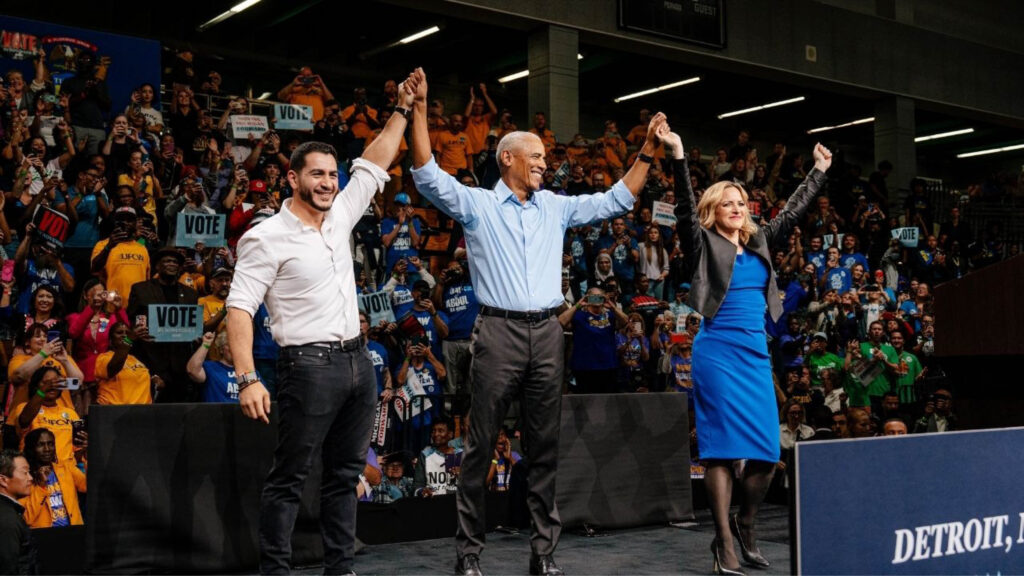
El-Sayed met the flood the way the old American populists met their own floods. Roosevelt, standing before the “old enemies of peace—business and financial monopoly,” had said it plainly in 1936: “They are unanimous in their hate for me—and I welcome their hatred.” El-Sayed absorbed the barrage in that same spirit, and something in his bearing, his steadiness, his refusal to lower his eyes, gave the words new breath. He campaigned on what he believed: medicine as a right, money out of politics, a foreign policy that answers to human rights rather than to the merchants of forever war. When they came at him with Islamophobia, when they tried to make his name and his faith into a weapon, he did not flinch. He turned the moment, again and again, into an affirmation of his allegiance to the Constitution, and the turning was so graceful, so unresentful, that it became its own kind of argument. And then there was Obama, in Detroit, at Cass Technical High School, drawing the line straight through history. “We have seen this movie before. I starred in it,” he said. “This stuff didn’t work on me. Not in Michigan, it’s not going to work for Abdul.” The words were more than an endorsement. They were a benediction from a man who had once been told he did not belong, offered to another man being told the same, and offered before a crowd that understood exactly what was being handed down.
But the benediction had an earlier echo. In 2007, at the University of Michigan, El-Sayed stood as valedictorian and delivered a commencement address about faith, belonging, and the audacity to believe the world could be changed. The invited speaker that day was Bill Clinton. When El-Sayed finished, Clinton did not wait to be polite. “I don’t want to embarrass your senior speaker,” he said, “but I wish every person in the world who believes that we are fated to have a clash of civilizations, and cannot reach across the religious divides, could have heard you speak today.” Later, Clinton pulled the young graduate aside and asked why he was going to medical school. “You got a gift for communicating,” he said, “and maybe someday you’ll run for office.” El-Sayed laughed it off. He told the former president that people with names like his did not get to run for office. Clinton chuckled and walked away. Nearly twenty years later, the joke has curdled into prophecy.
Victory, when it came, was made of small and unglamorous things. The progressive base, with Bernie Sanders and Alexandria Ocasio-Cortez standing at his side, gave the campaign its volunteer energy, the knock on the door, the phone call, the person willing to give a Saturday to a stranger’s future. Black voters in Detroit, whose turnout had been the anxious question after the primary, answered that question with their feet. And through it all he spoke of gas and rent and insulin, the price of living, the ordinary arithmetic of a family’s month, so that the culture war noise the money tried to raise around him never quite drowned out the one question he kept asking. “They might have been pointing to my name and my faith,” he said in his victory speech, “but we all know my name and my faith are not why you can’t afford your gas.” It was the voice of a doctor diagnosing a failing system, and it cut through the static.
What this victory means extends past Michigan. For a generation of young Muslims, Arab Americans, and progressives who have felt themselves politically homeless, El-Sayed’s ascension is a quiet and enormous affirmation. It proves that a candidate can stand against the machinery of AIPAC and still win a battleground state. It proves that a campaign funded by teachers and nurses can beat one bankrolled by hedge fund managers. In an age that has made a religion of cynicism, it offers a counter narrative, and the counter narrative is simply this: the organized, the hopeful, and the steadfast can still prevail. A storm bore down on a lighthouse, and the light is still burning. The doctor who weathered it has done more than win a seat. He has handed a generation a reason to run. The candidates he inspires will not need to ask permission, will not need to wait their turn, will not need to trade their convictions for a check. They will run because of who they are, and Wayne County will answer.
* Adel AlAdlani has a PhD in Public Administration from Western Michigan University