
By Rasha Almulaiki
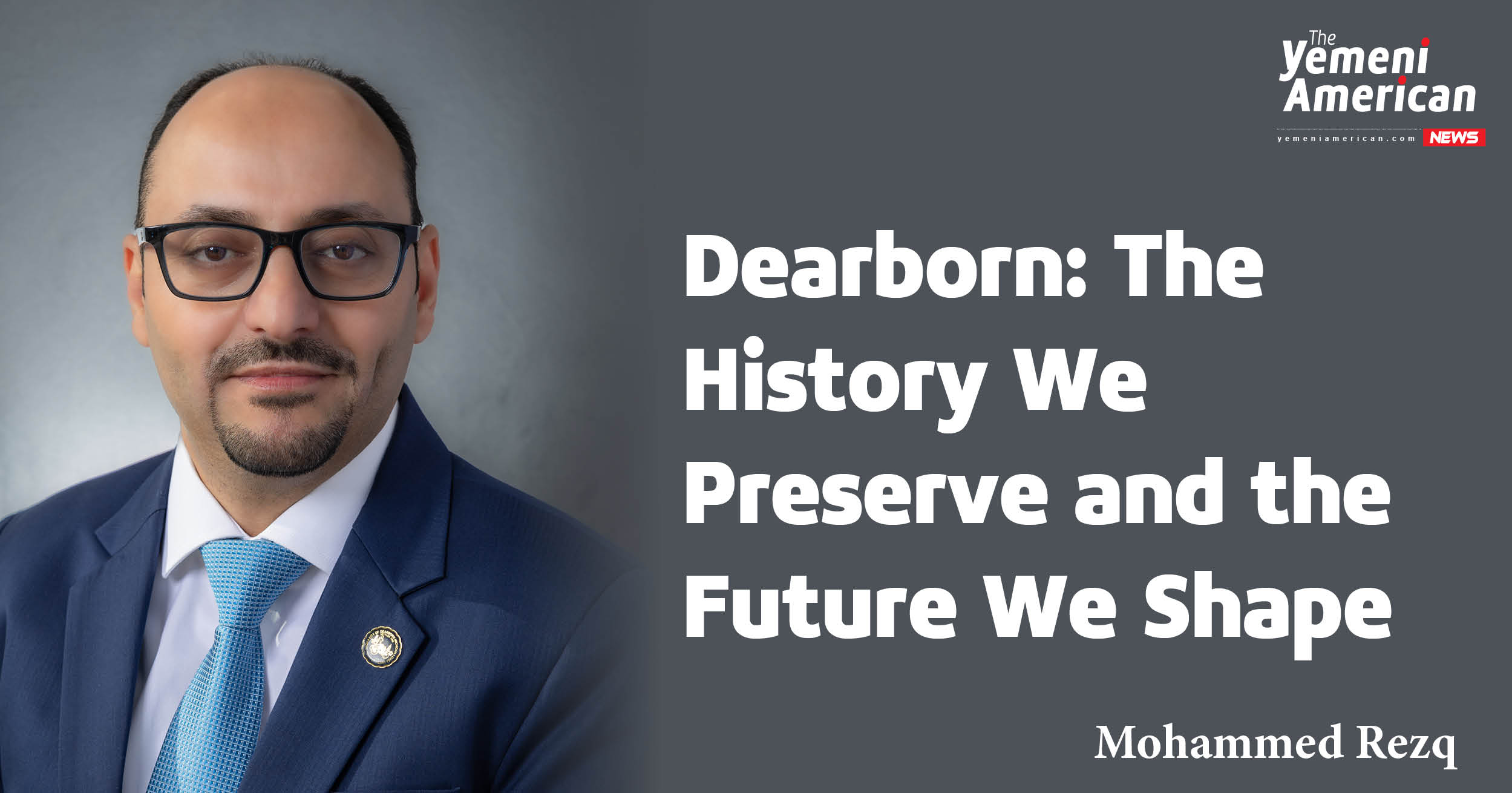
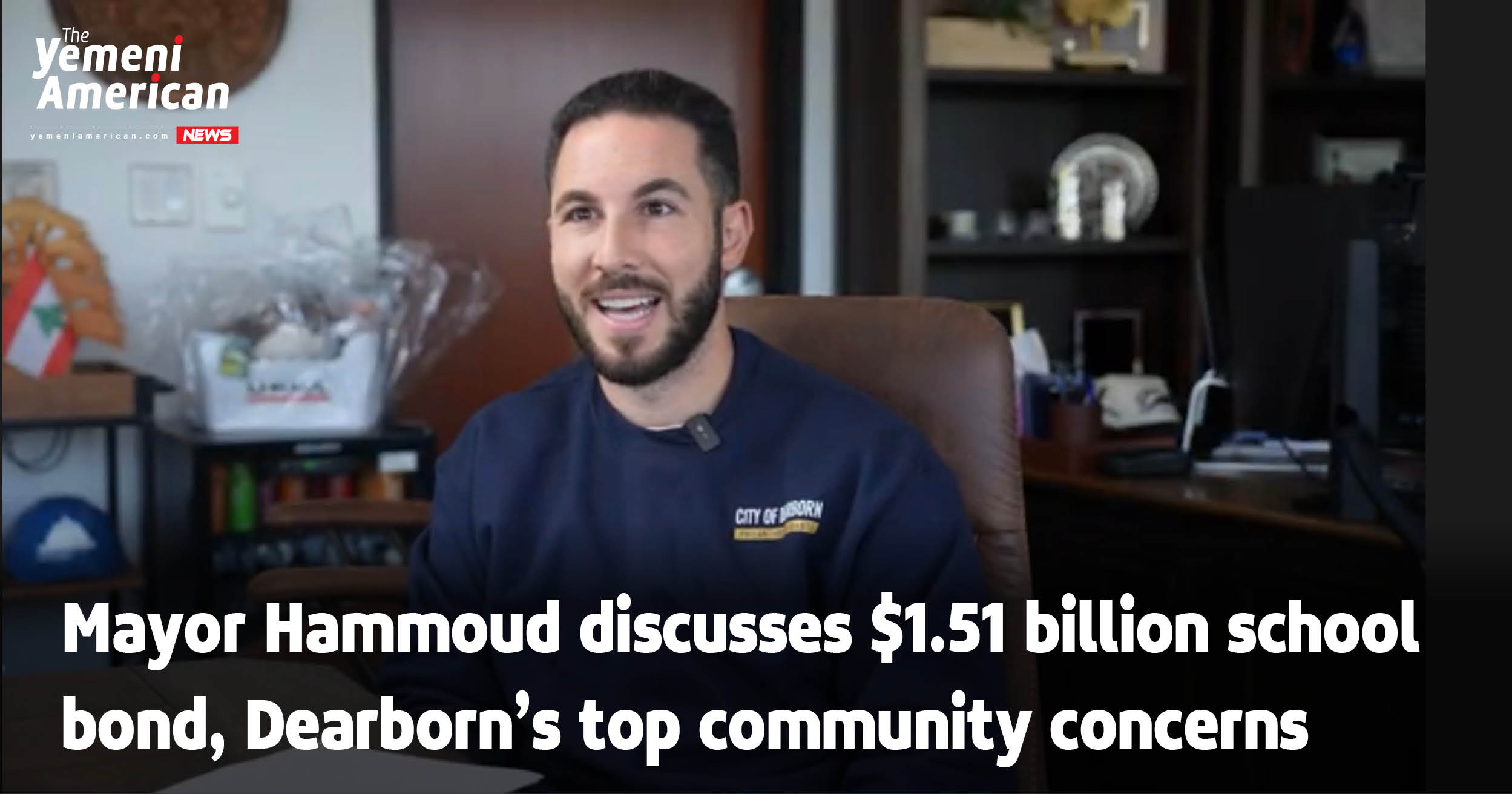
DEARBORN, Mich. – With Dearborn voters set to decide a $1.51 billion school bond proposal on Nov. 3, Mayor Abdullah Hammoud discussed the measure with Yemeni American News alongside some of the city’s most persistent concerns, including reckless driving, economic development, anti-Muslim targeting, environmental justice and Yemeni American representation.
School bond would reshape Dearborn schools
Dearborn Public Schools is asking voters to approve a 3.14-mill bond funding four phases of work over about 20 years, including six new preK-8 neighborhood schools and extensive renovations across the district. For Dearborn homeowners, the district says the increase would be offset by expiring city and school millages, resulting in no net increase to their combined city and school tax rate. Non-homestead properties, including businesses and rentals, would see an increase.
Hammoud said the failed 2019 bond pushed the district toward a more comprehensive facilities plan. District buildings average about 70 years old, with some more than a century old.
“Even if you have no school children, one thing you should know for sure: a strong school system means a strong city and a strong school system also means strong home values. This is a reinvestment into our city, your homes and into our backyard.”
Reckless driving and shared responsibility
Dearborn Police launched its Aggressive Driving Unit this year after unveiling three Ford Mustang Mach-E patrol vehicles during the Memorial Day Parade. The unit is part of a broader city strategy combining enforcement, roadway changes and education.
Hammoud said the City will continue enforcing traffic laws and issuing citations, particularly for reckless driving and drag racing, while also working on prevention. He pointed to safe-driving education efforts with Dearborn high schools, including driving simulators intended to teach students about dangerous behavior behind the wheel.
“We understand that anybody who’s sitting behind the steering wheel is not only responsible for their life and those in the vehicle, but also the lives of everybody else that’s sharing the road.”
But Hammoud said government enforcement can only go so far, placing significant responsibility on parents, particularly when young and inexperienced drivers are given access to larger or more powerful vehicles.
“The City is doing its part,” said Hammoud. “We don’t give breaks on reckless driving and drag racing.”
He continued,“We have parents that need to step up and make sure they’re watching out for your children.”
Warren Avenue transformation
The City is planning a major Warren Avenue overhaul backed by federal and local investment, including roadway, pedestrian, utility, streetscape and traffic-safety improvements. A facade improvement program is also underway to support existing businesses along the corridor, with a similar program in place at the Dix-Vernor corridor.
Hammoud said business owners have helped shape the project and acknowledged construction will be disruptive.
“We’re reinvesting back into the small mom and pop shops as they are, ensuring that they go on for generations more.”
The City expects the corridor to look substantially different by 2030 as roadway and facade projects move toward completion.
Dearborn’s image amid anti-Muslim targeting
Anti-Arab and anti-Muslim vilification is nothing new to Dearborn or to Arab Americans nationally. Hammoud, who was born and raised in the city, recalled earlier periods when outside agitators targeted Dearborn’s Muslim community and said the latest demonstrations are part of a familiar pattern.
“I think the best thing we can do is not change who we are,” Hammoud said. “When we have the quote-unquote crusaders who are coming into town, what they want is for us to retract back into our homes and live a smaller life.”
Rather than allowing those confrontations to define the city, Hammoud pointed to Dearborn’s immigrant history, flourishing business corridors, diverse food and arts scenes, major institutions and the growth of Yemeni coffee culture that helped put Dearborn on the map as the “Coffee Capital.” He described that success as a way of “planting a flag” around the issues and identity Dearborn residents themselves value.
“We’re always gonna have a target on our back because we believe in an American that is big enough for everyone and that is a threat to those who have a very small vision and idea of America. The best thing I can do is be unapologetic in who I am.”
Hammoud said residents also have to choose which confrontations deserve their energy, arguing that some outside agitators are unlikely to be persuaded of Arab and Muslim Americans’ dignity or belonging.
“What is more powerful is demonstrating how Muslims and Arabs in everyday life are making a difference, giving back, and really contributing meaningfully to this life in America.”
Yemeni representation in city government
Yemeni American residents have become increasingly civically engaged in Dearborn in recent years, including through more candidates seeking City Council seats and the campaign for the ward system proposal last year as a way to pursue more equitable neighborhood representation. So far, however, neither effort has resulted in greater Yemeni representation on the City Council.
Hammoud said representation matters because when communities are absent from government, what can be lost is perspective, trusted relationships and direct channels of communication to understand and respond to community needs.
He pointed to increased Yemeni participation within the administration and on city commissions.
“We have more Yemeni members of the city on the commissions like planning and zoning, City Beautiful, and Parks and Recreation, than ever before, and those individuals are now learning what’s happening within the halls of City Hall and if they pursue an opportunity at least they can speak to the fact that they have been doing the work.”
At the same time, Hammoud said the challenge of candidates campaigning within their own neighborhoods or demographic circles is not unique to Yemeni Americans. He described a broader tendency in Dearborn for communities to become politically siloed and, in effect, “redline ourselves within our own city.”
For residents considering elected office, Hammoud said engagement has to begin well before campaign season. He encouraged prospective candidates to become involved in commissions, neighborhood work and other city functions, build relationships across Dearborn and demonstrate a record of service before asking voters for their support.
He also pointed to Yemeni Americans already serving within City Hall, including business liaison Saeid Alawathi and Assessor of Record Marwan Abdullah, as examples of representation within the administration.
“Saeid has a network that’s different from my network, different that all the other liaison networks. And who better than to tap on the shoulder than someone who has built those relationships, who people trust?”
Hammoud said those relationships help the government better understand residents and connect businesses and neighborhoods with information and resources.
“And what is government if it’s not an agreement of trust between the residents and its administration?”
Southend investment and environmental justice
In the Southend, Hammoud highlighted park redevelopment, industrial enforcement and the planned Industrial Greenbelt, which would convert industrial property into green space and create greater separation between residential neighborhoods and industrial operations.
He recalled campaigning for state representative about a decade ago when an elderly Yemeni resident told him, “I’m gonna vote for you, but don’t forget us.”
“And I would like to believe 10 years later, I have not. That I’ve demonstrated not only in word, but in action, in investment, that we are investing heavily in a part of the community that has had an inequitable level of investment for so many decades.”
Looking ahead
Hammoud began his second term in January after winning reelection in 2025. He cited unfinished work in housing, road redesign, green infrastructure, economic development, libraries and the school bond.
“We deserve nice things, and I think that’s really what’s unfinished. There’s so many best case examples across the country and across the world, and I think Dearborn deserves to have so many of them and that’s really what we’re trying to build.”
Hammoud said he ultimately hopes residents can look back on his tenure and see investment reaching every neighborhood across the city.
##