
By, Mohammed Rezq
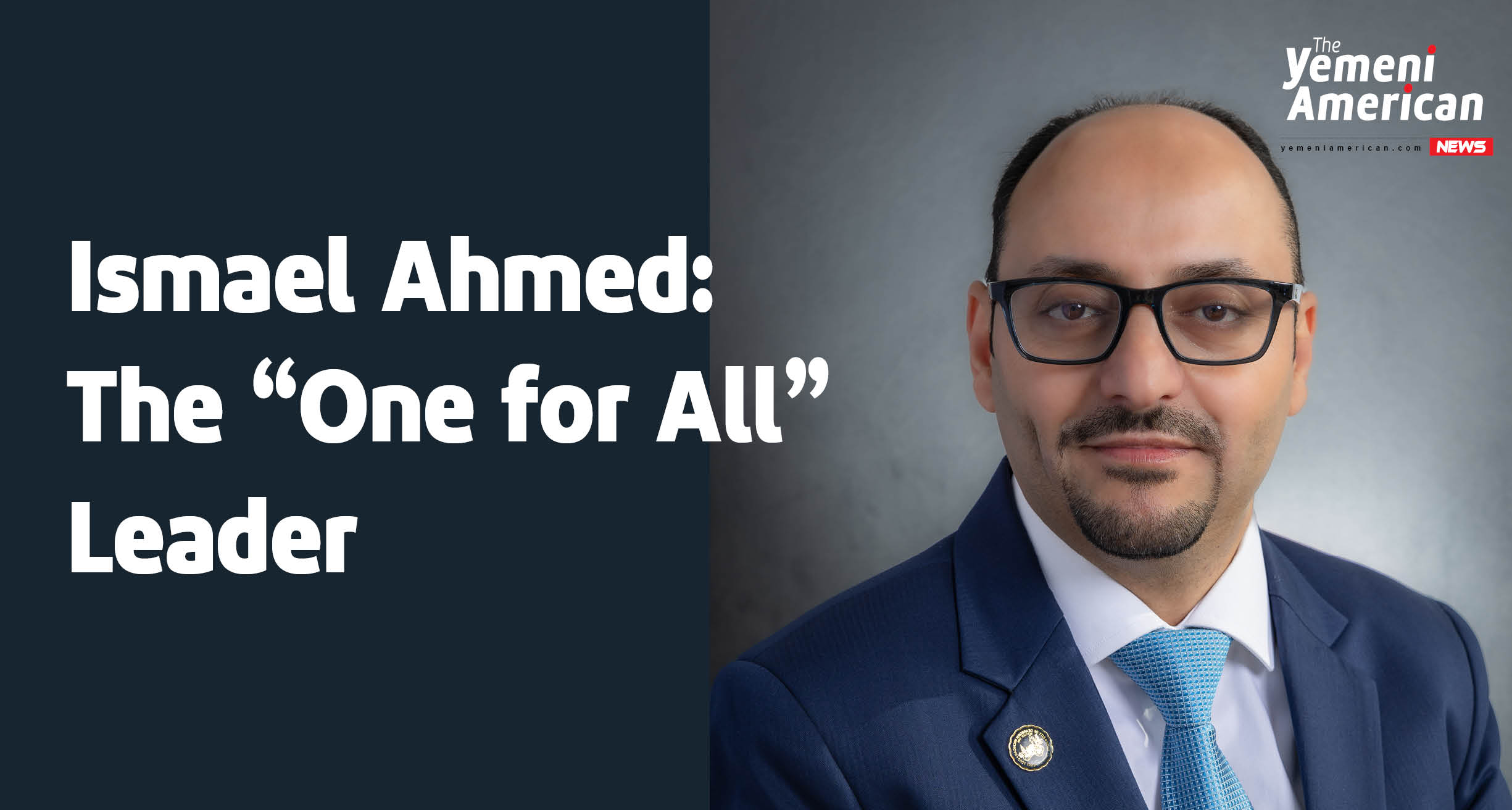
I cannot claim that I knew Ismael Ahmed personally. However, as the Arabic proverb suggests, “The footprints tell the story of the journey.” When I attended the celebration of Ismael’s life on February 8th at the Michael A. Guido Theater, I was astonished by the footprints he left behind. As I entered the 1,200-seat theater, I was struck not only by the capacity crowd but by its remarkable diversity. Arab Americans, African Americans, Hispanic Americans, and White Americans; Muslims, Christians, and Jews–all gathered under one roof. Despite their different backgrounds, they shared a singular bond: a deep appreciation for the legacy of Ismael Ahmed.

Though the program was scheduled for two hours, the theater was full long before the start. For three hours, the audience remained perfectly still and attentive, hanging on every word as speaker after speaker shared stories–many told publicly for the first time. I was deeply moved, realizing that Ismael’s life was a masterclass in a rare form of leadership.
In 1973, Ismael co-founded the Arab Community Center for Economic and Social Services (ACCESS), later serving as its Executive Director in 1983. His leadership eventually extended to the public sector, where he served as the Director of the Michigan Department of Health and Human Services from 2007 to 2011. Yet, beyond these titles, Ismael stood up for anyone whose voice had been silenced. He tackled misconceptions with grace, using love, kindness, and music as his primary tools for healing.His life was a living testament to the rare harmony of a big heart and an iron will–a man who relentlessly pursued justice, even when it required the quiet sacrifice of his own time and perhaps his private life.
In a leadership culture often dominated by ego– where hierarchy demands that everyone serve a single person at the top–Ismael modeled something far more enduring: “one for all” leadership. Whether in the organizations he led or those he was part of, his approach was never about building a platform for himself; it was about creating systems that served the overlooked. He rejected the “all for one” model, where resources orbit a single figure, understanding instead that real strength comes from distributing power.
Nothing exemplifies this philosophy better than his founding of the Concert of Colors. Through this beloved festival, he used music as a bridge for cross-cultural unity. He didn’t just advocate for Arab Americans; he created a stage for all voices, proving that art can dismantle prejudice and bridge deep divides. To Ismael, music was the universal language of human dignity. This was the mark of a man who invested in people and governance so that his work would outlive him. He never chased titles or power; he spoke a “truth” so compelling that people naturally trusted him to lead from the front lines.
Ismael Ahmed will be missed hugely by the community he spent his life building. We owe a profound debt of gratitude to his family, who selflessly shared such an amazing leader with all of us. We recognize that his public service often came at the cost of private moments with those he loved most, and the community is forever grateful for that sacrifice.
Our solace is that his legacy and unique leadership style will continue to inspire us for generations to come. He taught us that real leadership isn’t about the person at the top; it is about the collective rise of the people. In an era measured by visibility and personal branding, Ismael reminds us that the most effective leaders are those who distribute opportunity and voice to others. Because of his “one for all” heart and leadership style, we all can choose to rise together.