
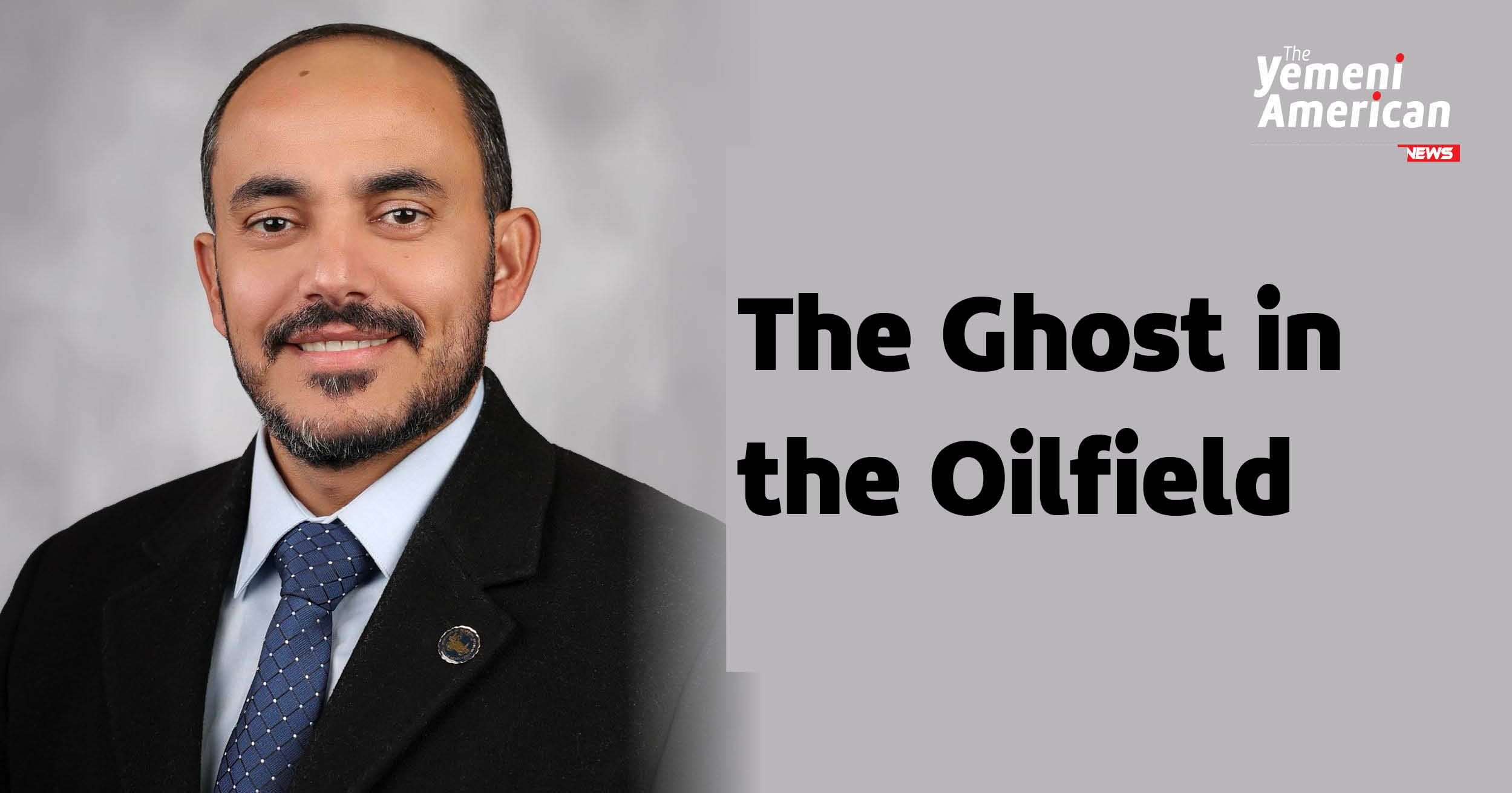
By/ Adel AlAdlani *
The specter of mercantilism is a subtle but persistent one. We imagine it consigned to history’s ledger, a relic of the sixteenth century when wealth was measured in chests of Spanish silver and power was hoarded behind high tariff walls. Its logic was brutally simple that the world’s riches were finite, and a nation’s strength lay in amassing the largest share, by decree and by force. Today, we speak the fluent language of global markets and free trade. Yet, in the silent depths of certain foreign oil fields and in the hushed corridors where strategic decisions are made, an older, starker calculus still whispers. It is a calculus not of simple theft, but of control; not of plunder, but of preemptive alignment.
To witness the relentless, decades-long pressure on a nation like Venezuela, a country drowning in poverty yet floating on the largest proven sea of crude oil on earth, is to see this ghost take solid form in the modern age. The statistics paint a portrait of this tragic paradox. According to OPEC, Venezuela holds 304 billion barrels of proven crude oil reserves, a staggering 18% of the global total, surpassing even Saudi Arabia. Yet, the nation’s economic output tells a different story. Hyperinflation, measured by the IMF, reached a cataclysmic peak in 2018, a rate so astronomically high it rendered the national currency virtually worthless, erasing a generation’s savings and livelihoods overnight. By 2022, the United Nations estimated that 94% of the population lived in poverty, and over 7 million Venezuelans, which is a quarter of the country, had fled, creating one of the world’s largest external displacement crises. This pressure is both an economic siege and a sustained geopolitical campaign. From 2017 onward, the United States, followed by the European Union and others, enacted escalating sanctions, culminating in a de facto oil embargo in 2019 that aimed to cut off the state’s financial lifeline. The result for the oil sector, once the engine of the economy, was a collapse from a production high of over 3 million barrels per day in the late 1990s to less than 500,000 by 2020, a throttling of the very resource that defines the nation’s potential. Here lies the neomercantilist haunting as the world’s greatest untapped wealth lies buried beneath a society in freefall, its very immobility a source of strategic tension.
Oil is the silent currency of contemporary power. It is the unspoken foundation upon which economies thrum and armies advance. While the United States has become a titan of production, its ravenous consumption creates a paradox of strength intertwined with profound vulnerability. It must remain, forever, a participant in the global bazaar of black gold. This inherent dependency breeds a strategic fixation that would be intimately familiar to a Tudor or Bourbon minister (the royal advisers of England and France during the age of mercantilism): the fear of scarcity, the need to secure favorable terms of trade, and the imperative to deny rivals a dominant hand. The mercantilist state sought gold and silver; the modern state seeks energy security and price stability. The objective of insulating national power from external shock remains mysteriously unchanged.
Venezuela presents the most tragic and telling paradox of this new era. Its estimated three hundred billion barrels of oil are more a mythic curse than a tangible blessing. Unlike the accessible, liquid riches of Saudi Arabia, Venezuela’s treasure is buried deep, thick and stubborn, defying easy or profitable extraction. It is a vast, locked vault lying just beyond the reach of current keys. In a purely rational market, such a resource would be a geological footnote. But geopolitics does not obey market logic alone; it obeys the older, colder law of potential. A vault can be opened by new technology, or by a new master. Therefore, a nation possessing such a vault, especially one aligned against your interests, cannot be ignored. Its very existence is a strategic variable, a piece left in a rival’s hand on the global board. The goal shifts from immediate profit to influencing who holds the future key.
History, of course, refuses simple tales. To claim that every American military intervention is a crude oil grab is to ignore the complex tapestry of human motives—idealism, fear, alliance, and sometimes genuine humanitarian impulse. They have intervened in rocky, oil-less mountains and tangled jungles for reasons that defy resource logic. Yet, it is undeniable that the presence of oil casts a distinct and darkening shadow. It raises the stakes, focuses the gaze, and lowers the threshold for action. It transforms a regional affair into a matter of “vital national interest.” The decades of complex entanglement with the Middle East have seldom aimed at direct ownership of fields, but at constructing a security architecture where energy flows according to a predictable, friendly calculus. The enduring objective has been control of flow, of price, of alignment. This is neomercantilism in its sleek, modern armor: not the direct looting of the galleon, but the relentless patrolling of the sea lanes that carry its cargo, ensuring they remain open and friendly to your ships.
The recent, turbulent decades of Venezuelan history must be viewed through this dual lens. The relentless sanctions, the diplomatic isolation, the whispered support for coups, the public recognition of opposition figures, these are not the tools of a simple economic competition. They are the instruments of statecraft applied to a resource-rich antagonist. They are the modern equivalent of a naval blockade, designed not to starve a populace, but to strain a regime until it cracks, hoping the successor will turn the lock on the vault with a more amenable hand. The comments from past interventions in Panama or Grenada, legally contentious and motivated by other stated aims, remind us that the executive power to shape small nations’ destinies is a well-worn path. When that path leads to the door of the world’s greatest unmined energy reserve, its paving stones begin to look very old indeed.
The mercantilist spirit never died; it merely learned new grammar. It no longer speaks of accumulating specie, but of securing supply chains. It does not demand colonial governors but prefers compliant partners. It conquers not with armies of occupation, but with markets, sanctions, and the occasional surgical strike. The galleons have been dry-docked, replaced by supertankers and future contracts. Yet they sail toward the same horizon: a nation’s enduring quest to convert the earth’s raw materials into enduring power, and to ensure that no rival does the same at its expense. In the heavy, dense oil beneath the suffering soil of Venezuela, we see the oldest game of all, playing out on the oldest stage, the map of the world, redrawn not by love or justice, but by the relentless, ghostly logic of dominance and fear.
* Adel AlAdlani has a PhD in Public Administration from Western Michigan University